Wednesday, 15 May 2013

Walk Down on Memory Lane of Havelock Road

Old Blk 29 Havelock Road taken in 1990
Looking through the old albums of the times staying along Havelock road was once my parent-in-law lived till 1998. Recalled the times they spent of their life living in their area facing the former land of blk 29 Havelock road that built around 1967 later than their block after they moved in early 1965. The junction of in front of Block 29 was the children's playground was known Emerald park now demolished. Isetan Office building (below picture) is just beside of Blk 29 Havelock road is still operating.
Behind Blk 29 Havelock road was Blk 31 and 33 soon to be demolished and now left this block still stands waiting to its fate that been boarded up in scaffolding in green and grey in colour.
Blk 29 Havelock Road (To Be Demolished)
They are now covered up with scaffolding and demolition is already underway. Sad to see this ironic 40-year old building is going to turn into history.
Salon Foto and Kong Ming Electric & Radio Service
Close-up of Salon Foto of two envelope sizes
I remember that there was once a 'Salon Foto', unit no. 631 that operated for a long time, specialised in Bridal Gowns & Suits for rental.They came with two envelope sizes which many current photo shops use long A4 sizes and others. My parents-in-law went there to have a Family Portrait and Passport Photo taken at this Salon Foto. And also there was a shop (Kong Ming Electric Radio & Service) that sold households appliances at former Blk 29 Havelock road unit no. 01-649 where my late in-laws bought a table fan in 1990 and its brand name 'KDK' 16' inch. I believe you still remember this brand for decades.
Bukit Ho Swee Community hidden away of constructions of the building
In front of the Blk 29 is the Kim Seng Community Centre is located in Tiong Bahru district. it was constructed in 1980 and was ungraded and extended in 1995.
Kim Seng Community Centre
In 2004, it was then decided that Bukit Ho Swee Community Centre (BHSCC) be closed, Kim Seng Community Centre was then further renovated and extended to absorb all activities from BHSCC. With the completion of the new extension and renovations, Kim Seng CC was able to maximize land use and consolidate the activities of both CCs for their residents.
Grange Centre
Ganges Centre located at 554 Havelock Road in the junction of Ganges Avenue, is the commercial property building and its space for office rental and sale.
Close-up of Ganges Centre
This Ganges Centre built in 1930s, is wholly-owned subsidiary by Kovan Properties Pte Ltd, of all strata units and the common area of the property known as Ganges Centre no. 554 Havelock Road, for an aggregate sold en-bloc for SGD$23.5 million. This building has been fenced up to prevent any access to this building as if it's going to be redeveloped into residential.
Blk 22 Havelock Road
Walking Through the old Havelock road would bring back memories of the times we shared before we shifted to the new house at Holland Village in 1998. I stayed at my late parents-in-law in 1993 till 1998. And my late parent-in-law stayed at blk 22 Havelock road from early 1965 to 1998 for around 33 years. The memories of them still lingers where I stayed for 5 years and it seems to be peaceful surrounding along the Havelock road and Beo Crescent. But before that, there was no shopping centre till in 1994, the opening of Tiong Bahru Plaza along the Tiong Bahru road stretched down the road of Lim Liak Street in the junction of Seng Poh road.
The green facade of the building 
The outermost of green facade designed of the block (Blk 22) is the same as former Blk 29 Havelock road (top picture) and its colour was light orange. The Deco design of this block is much older and well-maintained till it was ungraded in 1998 that was when we shifted to the new location after sold to the second buyer (resident). My hubby and I managed to come back to take a look at his old block after so many years since we moved out in 1998, he was once lived when he was in primary school kid then. He recalled that there was once a 'big' fire behind his block that up the hill along Bukit Ho Swee that was used to be wooden villages and he saw big 'black' smoke as if it was going to burn down all the wooden villages in the rows.
Corner of Kopitiam at Blk 22 Havelock
At the corner of kopitiam of Blk 22, these stalls used to sell famous 'Pak Ku Teh' and other foods where the residents of this block used to come down and have their lunch and dinner as well as meeting friends for a cup of tea or coffee. These stalls are still operating since after the completion of this block (22) in early 1964. I used to come down and bought 'take-away' for dinner and the next building is the shophouses known as 'Eating Houses'  that operated in restaurants and eating houses that was once the famous food like 'Teochew porridge'. Behind the Blk 22, there is a Cooked Food Centre at Blk 22A/B Havelock road built in 1969 and currently upgraded in 2007, comprised 30 cooked foodstalls, is the famous of Bak Ku Teh, and also at  Ya Hua Bak Kut The Eating House at 593 Havelock Road.
Shing Lee Bookstore at Blk 22 Havelock Road
Just below Blk 22 Havelock road, near to the 7-11 store, is the famous bookstore that has been operating for over 40 years. 
Havelock Family Clinic
At the corner end of Blk 22 Havelock road, is a Havelock Family Clinic that has been operating for over 40 years but the doctor-in-charge has changed and I could remember the name of its doctor when I visited this doctor in 1995. This Havelock Family Clinic still remain the same as it is and it could be his next family generation to take over or its partners. Family Practice Clinic specialises in Skin; Hair Problems, Laser Tattoo removal, Laser Photo, rejuvenation, Aesthetic Medicine.
Facing the road of shophouses and old HDB flats (Now)
Shophouses facing vacant land
Shophouses facing the vacant land that used to be HDB blocks 51 to 54 (demolished) along Havelock road. Block 50 is seen in the photo background beside rows of shophouse.
In front of Blk 22 Havelock road
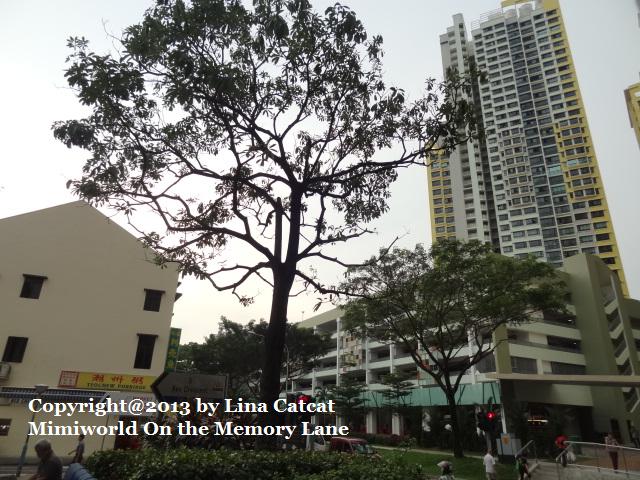
In front of Blk 22 Havelock road were Block 53 & 54 that was once stood in early 2000, was the pot of empty land which is now built high-rise buildings (below)
Upgraded Eating Houses and Current Flats (Then)
There was once the rows of flats (Blk 51 to 54) that built in early 1969 and the shophouse opposite. For the block of 51 to 54 along Havelock road had been demolished in the year 2000 after we shifted to a new location in 1998. These picture (above -Then) was taken in the year 1990 and it looked like the modern time of Singapore flats.
Ads of 'Coca Cola' no longer there
At the corner of eating houses and restaurants, the signage of 'Coca Cola' had long gone from the look of the old photo above and it was done by the upgraded of the wall of the painted that transformed to a Deco design and the rooftop had changed.
Corner end of the Eating Houses - B/W photo 
The facade of the this eating house is well-maintained and furnished of the outermost facade of the building to the touch painted.
Then current HDB flats after demolished of old flats
The Development of the current flats is now known as 'Havelock View' of Blk 53, right behind is Blk 52 highrise flats. Furtherdown on the right, there is current flat of Blk 54. Well, there is no Blk 51 now used to be the site of Blk 53 Havelock View.
Blk 50 Havelock Road
Now, the remaining of an old ironic Block 50 Havelock road still stands today and the ground floor is the supermarket - NTUC fairprice has been operating since.
Coin-phone (public phone)
Coin phone (Public Phone)
Along the Block 50, there are few old humble coin-phones (public phones) located at the void deck of the block still stands today even if the old residents living in this block use it. Long time ago, there was an old phone (orange) at Clementi hawker centre where my childhood friend's foodstall still operates in business, the coin 'orange' phone is still in use.
Card-Coin phone
Over the years, the public phones would change into card-coin-phone (prepaid card) located in this same block near the NTUC supermarket. I could see some foreign workers or housemaids could still use public phone as if they couldn't afford to buy handphone.
Back view of Beo Crescent Market and Food Centre
As we walked at the back of the Beo Crescent Market and Food Centre at Blk 38A to the front of this old wet market that has been operating for over 40 years. I always went for marketing and buy food during the period of 1994 to 1998 before I shifted to a new house. My late parents-in-law went there for 30 years when they were alive. It's just behind their old Blk 22 Havelock road.
Side view of Beo Cres. Market and Food Centre
In font of the Beo Crescent Market and Food Centre, there is a Refuse Centre on the right of the photo shown (above picture) which is a Garbage Waste for the recycle.
Passageways leading to carpark
At the corner of the Beo Crescent of blk 38 Beo Crescent is the passageway to the carpark above.
PSB Academy
Walking towards blk 34 Beo Crescent, there is a foodcourt that is still operating. Walked up the staircase leading to the building - PSB Academy located at 355 Jalan Bukit Ho, is a well established private institutions that offers full time and part time certification from degree, diploma to master courses. PSB begins traces back from 1964 in Singapore. A small Productivity Unit was set up in the Economic Development Board (EDB). Its to upgrade the knowledge and skills of Singapore’s workforce in order to meet the needs of the growing economy.
From there, we headed toward the Tiong Bahru Plaza (completed in 1994) just behind this building at the junction along Bukit Ho Swee crescent.
Do you know Bt Ho Swee fire on  25 May 1961 that spread across the roads that sparked fly by strong wind to Havelock road and Beo crescent to where my hubby's family stayed and there was second fire in Nov 1968 in Bukit Ho Swee. But the early fire broke in 1907 at Havelock road along godowns warehouses. Two big fires in 1961 and 1968 made 9,000 people homeless and had changed them all.

Wednesday, 8 May 2013

A time walking through Pre-war Houses and Tiong Bahru Market

Pre-war houses and Tiong Bahru Market
Surrounded by Seng Poh road, Tiong Poh road and Outram road are the 1st public housing estates, comprises 2-5 storey pre-war public housing Flats built by SIT in 1930s. THere are also 2-storey shophouses along Tiong Bahru road built in the same period as pre-war flats. As for the 1-4 storey Art Deco style shophouses along Outram Road built in the early 1940s.
Tiong Bahru Heritage Trail traces the history of Tiong Bahru as it transforms from a cemetery to one of the most sought-after residential addresses. Follow by the trail to discover the beginnings of the estate when early settlers arrived after the General Hospital was relocated to Sepoy Lines. When the Singapore Improvement Trust (SIT) took to develop the area for its third public housing program. Uncover the history behind Tiong Bahru's unique architecture, its famous food stalls and well-known personalities. The trail will also reflect to the old Coroner's Court and the now-demolished Outram Prison once located at the foot of Pearl's Hill, as well as other historical sites such as Tan Tock Seng's grave.
Dancing Girl Sculpture taken in early 1980
Take a look at Dancing Girl sculpture at Seng Poh garden taken in early1980 when I was still in school at Tiong Bahru Secondary School located nearby and now no longer there been demolished, which was the original (above picture) before it was built later that year
Dancing Girl Sculpture taken in 2013
It's been changed since 1970 and 2013 (now and then), a sculpure erected by the National Day Celebration Working Committee of Tiong Bahru Constituency, was unveiled by the Minister for Defence, Mr Lim Kim San on 1st Aug 1970. Today, Seng Poh garden is located at the an open grassy area which residents used for their morning exercise and gatherings.
Blk 22 Havelock road
Side view of Blk 22 Havelock road
Havelock road is the street name and the region of Tiong Bahru. My parent-in-law was once lived at Blk 22 Havelock road (3-room room flat) for more than 30 years before they shifted from Craig road shophousese opposite Neil road in 1965. By the time, Tiong Bahru Plaza was not yet built until it completed in 1994. At Havelock road was once kampong villages along Bukit Ho Swee before the 'Big' fire in 1961. I stayed with in-law for 5 years before shifted to Holland Village in 1998 and the old flat where my in-laws (early resident) stayed and eventually sold to the second buyer (2nd resident).  That times, my in-law only paid one-time S$5000 for the whole unit and lived for 33 years, at that time they were poor old folks living in that block during old times that were surrounding by villages. 
Beo Crescent Market and Food Centre
Behind the block is the Beo Crescent Market & Food Centre that divided into two adjacent sides of the building - Beo Crescent Market and Food Centre surrounding the HDB blocks of flats along the Havelock road, is also one of the oldest market and hawker centres since till now it's still operating. Take a look at it and the different from Tiong Bahru Market that was once like this.
Global Residence along Tiong Bahru Road
Along the Tiong Bahru Road is the Global Residence which has 5 blocks of buildings where the foreigners and expats were living this buildings was owned by Global Residence Pte Ltd, is a Service Apartment for foreigners as well as expats from overseas. Their rental service apartment is very expensive compare to the Condo rental that my bosses from overseas rented the whole unit based on their contracts service working in Singapore. Opposite the road of Global Residence is the Blocks of Lim Liak street where there is a Singpost (Singapore Post Office) of Blk 28 Lim Liak Street, is seen by motorcycle parking along the Tiong Bahru road.
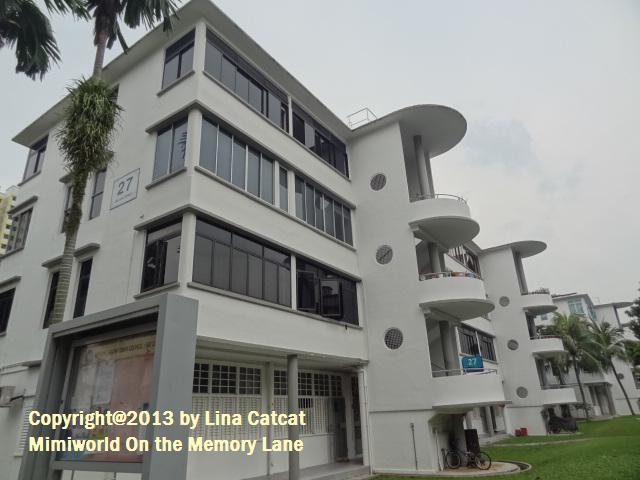
Blk 27 Lim Liak Street
These Post-war flats were designed by Lincoln Page and Robert F.N. Kan, built in between 1948 and 1954 after a few year in WWII ended in 1945 to embarked of the public housing projects in Tiong Bahru in order to help tackle the shortage of the housing estates. All the Post-war flats and shophouses that was built with spiral staircases at the rear of the apartment blocks and the back of the shophouses too.
Rows of Blks of flats between Kim Pong Road and Kim Cheng St
Rows of Blocks of flats are Moh Guan Terrace
The street of Lim Liak Street (1941) was named after Lim Liak (alias Lim Leack) who came to Malaya from China in 1825 to work in Tin Mines before moving to Singapore to start various businesses. Lim Liak was the proprietor of Leack, Chin Seng and Co as well as Chop Hiap Chin that dealt with tapioca platntations and shipping and was very well-repected in the Chinese community and died at the age of 71.
Moh Guan Terrace was named after See Moh Guan (1879) who was born in Malacca and was the fourth son of See Hood Kee (1793-1847) who was the nephew-in-law of Tan Tock Seng (1798-1850), was in the pepper and gambier business. In 1879, he assumed chairmanship of the Tiong Bahru Heng San Teng temple, taking over from his father who had passed away that year. In juction of Moh Guan Terrace, you can see the Dancing Girl sculpture at Seng Poh Garden
Front Entrance of Tiong Bahru CC
The front entrance of Tiong Bahru Community Centre is built with 'Red' brick after 1960 after focing to shutdown and it became the most notorious gambling venue for the residents in 1956. Later the management of the community was handed over to the Dept of Social Walfare and then to the People's Association (PA). A few year after 1956, gone through series of revamp, the Tiong Bahru Community Centre reopened in 1960
View from the front with basketball court
Normally the Tiong Bahru Community Centre is the earliest community centre during the period from 1951 to 1960 was established at Eu Chin road, at the cost of S$20,000 was opened by Duncan Robertson on July 1951 in front of some hundreds guests and residents.
View to the end of the Tiong Bahru CC after the court
The Original of Tiong Bahru CC was in fact converted a 'self-contained' of the Air-raid shelter along the Eu Chin street in 1951 as it is still around today.
At the Back of the Tiong Bahru Community Centre
The Air-raid shelter is located at the quadrangle bordered by Tiong Poh Road, Guan Chuan Street, Seng Poh Road and Eng Watt Street were converted for use as the Community Centre’s administrative offices, library and classrooms. Later the revamped Tiong Bahru Community Centre was officially re-opened by Kenneth M. Byrne (1913–1990), Minister for Labour and Law.
A peek through the window of CC (at the back of the building)
Apart from the Community Centre, I walked outside at the back of the Tiong Bahru CC along the street of Eu Chin road where there is another 'Red' brick of Blk 81 & 82 of Seng Poh street.
Close-up of Patterns of red darker & lighter bricks
The pleasing of patterns of red (darker & lighter) of bricks on the wall of the building of Tiong Bahru Community Centre and also at the rear building of corner end as shown picture below.
'Red brick" at the rear of Tiong Bahru Community Centre
As you can see red bricks at the corner end of the Tiong Bahru CC that is fully covered overall at the back of the building and the bricks is the use of the building of balconies of these pre-war flats and also the Blk 57, 81 & 82 Seng Poh street.
Spiral staircase of the shop of Tiong Bahru estates
Bricks workd on Balcony of Blk 81 Seng Poh road
From the Blocks 81 and 82 along Tiong Poh Road were known to early residents as ‘aeroplane flats’ because they appeared as it is that from a distance, like the shape of the wings of an airplane.
Side View of Blk 81 Seng Poh road
The unique design feature of Tiong Bahru’s flats is the use of red brick work on some of the balconies. These fair-faced (unpainted) facing bricks are laid out in pleasing patterns of darker and lighter bricks (above picture close-up). You can see these at blocks 57, 82 and 76.
Shape of the wings of Blk 81 Seng Poh road
The featured of Tiong Bahru's window and door frames that were imported all the way from England, from the famous Crittal Manufacturing Company. These windows and frames were glazed in unique green coloured glass that could cut out the tropical glare and heat.
Spot a snail sitting on the wall building opposite of Tiong Bahru Market
Close-up of a snail
I spotted a 'adult' snail that sitting on top of the wall building just opposite of Tiong Bahru Market  along Lim Liak Street as if it knows my presence, stood still without any movement. Too bad, I wouldn't see its head popped out and it seems scared but luckily there is no birds around and it's safe.
Tiong Bahru Market in 2006
In fact, the newly-opened of Tiong Bahru Market located at 30 Seng Poh road, was formerly known as Seng Poh Market in 1955, under the charge of the National Environment Agency, the first modern market to be built in a housing area. I remember that I used to walk pass by when I was still in Tiong Bahru Secondary school (now no longer exist) at nearby that was once wet market with streets hawkers along the streets.In 1990, I used to call the market - Tiong Bahru Food Market and Hawker Centre before it changed to Tiong Bahru Market. A walking distance from a Tiong Bahru Mrt station is just about 5 to 8 mins, cut through the Lim Liak street of pre-war flats along two bus-stops ahead of it.
Licenced Hawker issued by Singapore Hawker's Union
In those times, the hawkers were all street-hawkers and well back then, my late mother-in-law was one of them and she was lucky as she was licenced hawker around late in 1955, and those who were under constant threat of being chased off as street-trading was illegal. Tired of their uncertain lifestyle, the hawkers organised themselves and petitioned successfully to the Governor of Singapore, for a market to be built.
Earth God in front of Tiong Bahru Market
In front of Tiong Bahru Market, was the Earth God seating in front of the market that facing to it. Most hawkers pay homages to this god for their business prosper and safety of the building.
Wet Market
Tiong Bahru Market which has three storey levels of building, the first floor is the market while second upper floor is the food hawker stalls and the 3rd floor is the carpark.
2nd Floor food centre above the market
In the second floor level, just above the market that has a wide range of hawker stalls that divided two sections (see as above) that surrounded the building where there are almost more than 50 food stalls of different variety of food spreading out their traditional style of foods.
Shaded atmosphere of hawker centre 
Scenic View of the buildings (Picture taken from the carpark)
True enough, you can see the scenic view landscape of the buildings that surroundings of the Tiong Bahru Market on top of the carpark.